A Maldivian research and advisory firm supporting island nations and coastal communities around the world adapt to rapid climate change and development trajectories.
Island-led. Evidence-based. Future-focused.Sea level, illustrative +0.00 m
The conversations that shape island futures usually happen somewhere else. We think they should start here.
In rooms far from the people living the consequences. In reports written about islands, rarely with them.
We’re a climate research and advisory firm based in the Maldives and islanders ourselves. Working across adaptation, policy, finance, and community, we help governments, agencies, and island communities turn climate goals into practical action, grounded in the lived realities of the places we call home.
We are proudly the first female-owned climate research firm in the Maldives.
Not what do islands lack, but what already works here.
8 of 10 islands sit below the line Schematic, for illustration
80%
of Maldivian islands sit less than a metre above the sea
90%
of the food in the Maldives arrives by ship
20+
years of climate and development expertise across our directors
12
published works on adaptation, climate finance and island resilience
Island figures from Anaa Hassan, “The resilience that was already there”.
Practical, evidence-based solutions for island contexts
From national policy to community engagement, our work spans the full arc of climate adaptation and sustainable development. We work with island governments, UN agencies, development partners, and the communities themselves.
Climate adaptation and resilience
Adaptation planning, vulnerability and risk assessments, disaster risk reduction, and locally led adaptation.
Climate finance
Improving access to and delivery of climate finance, plus tracking, reporting, and budget tagging systems.
Governance and policy
Climate and development planning, policy analysis, and environmental governance and mainstreaming.
Research and evidence
Applied research and evidence synthesis that starts from island realities, not imported assumptions.
Social development and inclusion
Putting gender, equity and community voice at the centre of adaptation and development work.
Sustainable development and island futures
Long-term pathways that keep communities, culture and ecosystems at the centre of island development.
Mission
To deliver evidence-based, locally grounded research and advisory services that strengthen climate resilience, environmental sustainability, and inclusive development across island contexts.
Vision
To help build resilient, sustainable, and equitable futures for small island developing states and the coastal communities most exposed to climate change.
The values that guide our work
Our values aren’t a wall decoration. They’re the standpoint we work from, shaped by lived experience on small islands, and by a belief that resilience has to be built with the people it’s meant to serve.
Shaped by Islands
We don’t study island life from a distance. We live it, and that lived reality shapes every question we ask.
Evidence, not assumptions
Every recommendation rests on rigorous research and local context.
Inclusive by design
Resilience that leaves people behind isn’t resilience. We centre gender, equity, and groups that are most exposed and vulnerable to climate change.
The long horizon
We plan for futures, not funding cycles — resilience meant to hold across generations.
What we’re currently working on
The work in progress that reflects our commitment to evidence-led, locally grounded approaches to the challenges facing small islands.
Hanimaadhoo CouncilHanimaadhoo Development Plan formulation (2027–2031)
National Disaster Management AuthorityMaldives National Risk Register and Assessment
Hover a project to see where it works.
“Who can work, sleep and stay well is starting to depend on who can afford to run a unit.”
Research and advisory that makes meaningful impact
A snapshot of key contributions by our directors across climate adaptation, finance, and resilience.
Two decades of climate and development expertise across adaptation, climate finance, development planning, governance, research and locally led development in the Maldives and beyond.
Managing Director
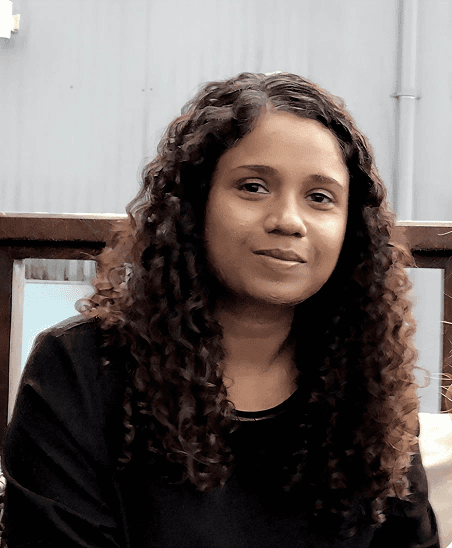
Dr. Aishath Azfa
Azfa has spent more than twenty years on a deceptively simple question: how do island communities adapt to a changing climate without losing what makes them home? Her work runs across climate adaptation, governance, gender and social inclusion, and policy advisory — from national strategy rooms to grassroots councils across the Maldives.
She’s provided technical support to the World Bank and the Asian Development Bank, advised the Resilient Island Group in the Netherlands, and worked with universities in Australia, the UK, and Canada. Her PhD, from the University of Melbourne, examined the political economy of engineered islands in the Maldives — what happens to resilience, dignity, and rights when communities are relocated onto artificial land.
That question still drives her work today: when we build new islands, who gets to thrive on them?
Throughout her career, Azfa has served the Government of the Maldives and a range of international development organizations, including multiple United Nations agencies, the World Bank, and the Asian Development Bank. Her question has taken her to nearly all inhabited islands in the Maldives, where she has seen firsthand both the hard realities of island life and the resilience that defines these communities.
Azfa holds a Master’s in Sustainable Development from the University of Queensland, where she graduated in the top 2 percent of her cohort and received multiple Dean’s Awards, the university’s Future Leaders Award, and the President’s Award for Special Achievement in academic excellence, conferred by the President of the Maldives. She completed her PhD in 2025 at the School of Geography, Earth and Atmospheric Sciences, University of Melbourne. Her thesis, The Political Economy of Engineered Islands in the Maldives, examined the ideas, interests, and institutions driving land reclamation and artificial island-building in the Maldives, and how these political and economic forces shape household vulnerability to climate change.
Director
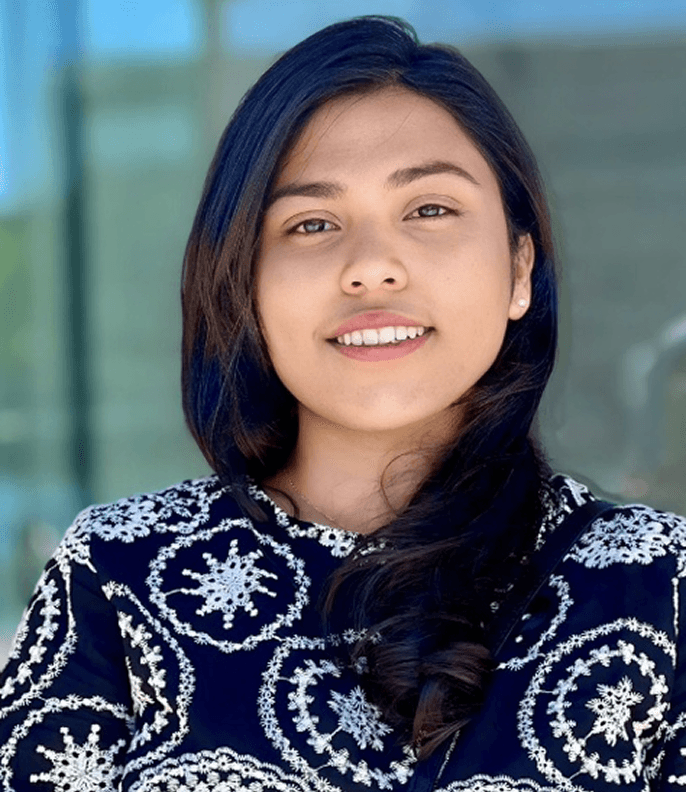
Dr. Mariyam Anaa Hassan
Anaa has spent more than a decade working on climate policy, adaptation and resilience. She served as Assistant Director in the Climate Change Department at the Maldives Ministry of Environment, where she coordinated the country’s reporting to the UNFCCC and sat on the national climate negotiating team.
She now consults for the International Institute for Environment and Development on locally led adaptation and on getting adaptation finance to the small island and least developed countries that need it. Her PhD, jointly awarded by the University of Melbourne and the University of Manchester, examined food system resilience in the Maldives — what kept islands fed when global supply chains failed during the pandemic, and why the answer turned out to be already there, long before anyone arrived to help.
That finding still shapes her work today.
Her doctoral research was completed under the Cookson Scholars dual award programme and drew on ethnographic fieldwork across two case study islands. It was published in Geoforum in 2026 as “Islandness and resilience: a study of food systems in the Maldives”. The work argues that small island states are not passive recipients of external shocks, and that resilience is built through everyday practice, social networks, and decentralised governance long before any crisis arrives.
Anaa’s policy career began at the Maldives Ministry of Environment, where she coordinated the technical preparation of the country’s First Biennial Update Report and Third National Communication to the UNFCCC. She currently consults for the International Institute for Environment and Development in London, where she is part of the Climate Change Group, including support to the secretariat of the Climate and Development Ministerial.
Anaa holds an MA in Environment, Development and Policy from the University of Sussex, awarded with Distinction and supported by the Chancellor’s Masters Scholarship, and a First Class BSc in Environment and Sustainability from Keele University, where she received the School Dissertation Prize. In 2020 she received the President’s Award for Special Achievement for her Masters degree, conferred by the President of the Maldives.
Our work is grounded in published research
Peer-reviewed articles, policy reports, and technical contributions across climate finance, adaptation, and island resilience.
From time to time we bring in specialists: researchers, designers, translators, facilitators, to strengthen specific projects. Register your interest and we’ll be in touch when a suitable opportunity arises.